When is the best time to visit Prague?
Month-by-month guide with temperatures, prices and crowd levels in Prague
Tareq Maanan
Founder and guide at ODISEA. I came to Prague more than 10 years ago and never left. Over 5,000 tours later, the city still surprises me. I write these articles for the same reason I guide: so that nobody leaves Prague with the brochure version.
March 14, 2026 · 11 min readThe question we get asked most before people book a flight: when is the best time to visit Prague?
At ODISEA we have been guiding in this city since 2017: in January with snow, in August at 35 °C and in April with four kinds of weather in a single day. The honest answer is that there is no perfect month, but some months are clearly better than others, depending on what you are looking for.
Prague is not a seasonal destination: it works all year round. But the experience changes radically between a May day with everything in bloom and a January day at -4 °C with the sun setting at 16:00. This article gives you the data (temperatures, prices, crowds and events) so you can choose with information, not intuition.
One thing before we start: in 2024 Prague welcomed more than 8 million guests in hotels and other accommodation, a record according to the Czech Statistical Office. Far more people come in summer than in winter, but Prague never empties out. What changes is the intensity.
Prague in spring (April and May)
Spring is when Prague wakes up, and it is one of the seasons we most enjoy guiding.
April: beauty and unpredictability
April is a contradictory month. It can be 14 °C and sunny at midday and 3 °C with hail three hours later. That is no exaggeration: we have lived it on our tours. The weather is genuinely unstable: rain, sun, wind and rain again in the same morning.
But when the sun comes out, the city is something else. The Prague Castle gardens open in April, the cherry trees on Petřín start to blossom and the terraces put their first tables out. If your visit coincides with Easter, the Easter markets fill Old Town Square.
Crowds in April are moderate, accommodation prices are below summer levels and the city has a manageable pace: it is not yet the July avalanche. For a complete guide to the month, see our article on Prague in April.
May: the guides' favourite
If you make us choose one month, we choose May. The weather settles (highs of around 19 °C), the days get longer, everything is green and in bloom, and the crowds have not yet reached summer levels. It is the month when tours are most enjoyable: groups are in a good mood, the light is perfect for walking and you can be outdoors without being cold or hot.
Ideal for: couples, photographers and anyone who wants good weather without extreme heat or stifling crowds.
Prague in summer (June to August)
Summer is high season. Everything is open, the days are very long (in June it gets dark after 21:00) and the city lives outdoors. But it comes at a price, literally and figuratively.
The good
Beer gardens are the summer experience in Prague. Riegrovy sady has views of the Castle and a beer costs around 80 CZK (about €3.20). Letná has the most famous terrace. And at Náplavka, on the riverbank, the craft beer stalls fill up.
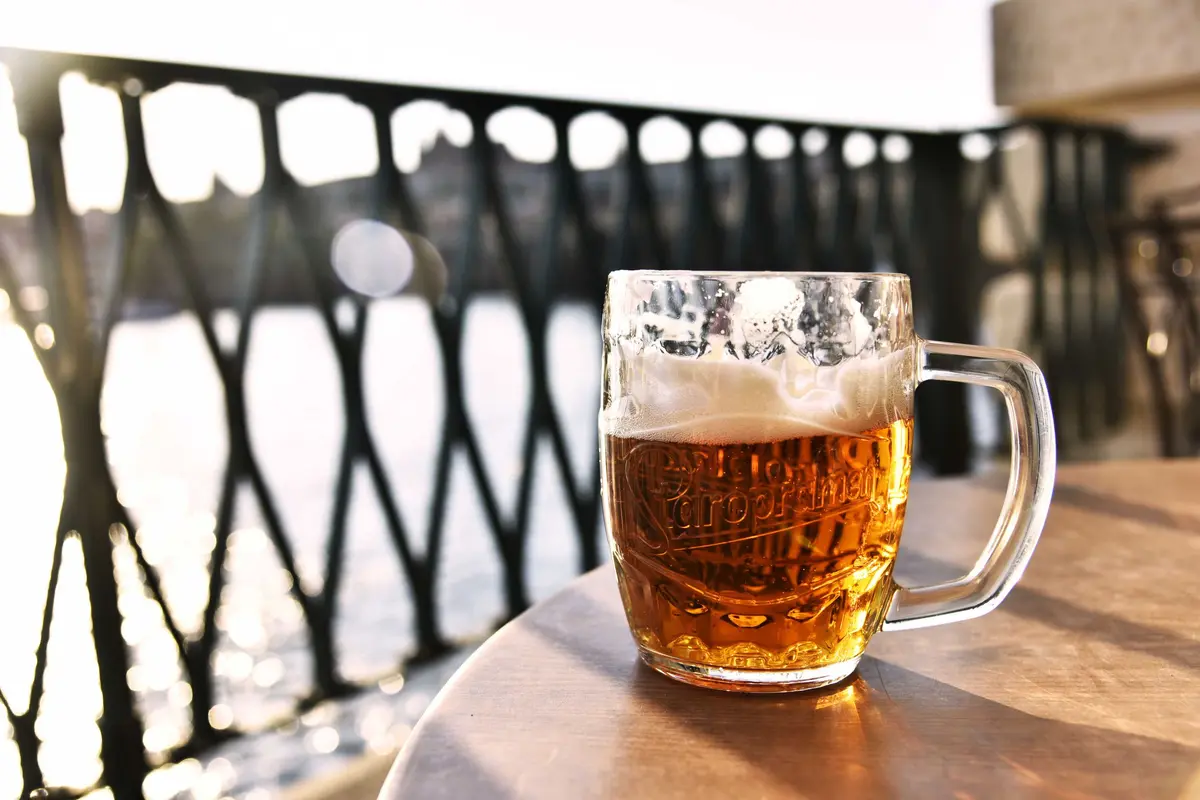
Outdoor culture takes off: music festivals, concerts in the parks and sunset cruises on the Vltava. This is when Prague feels most alive.
Day trips are also at their best: the castles and towns around Prague open with their longest hours. More details in our guide to Prague in summer.
The bad
July and August are the peak of the year. Hotels are clearly more expensive than in spring, groups are bigger, the queues at the Castle grow longer and Charles Bridge at 11:00 is a human traffic jam.
From our experience as guides: in summer groups are larger and there is more friction with the crowds. You have to keep an eye on hydration, look for shade for the explanations and compete with the background noise. The tour works, but the experience is different from May or September.
The heat can reach 35 °C on some days. For someone from Madrid that may be nothing; for someone from London, it is a change. Wear trainers or sandals with good soles, never flip-flops: the cobblestones are unforgiving. And bring sun cream. More tips in our guide to Prague in August.
Ideal for: families with children on holiday and anyone looking for long days and a festive atmosphere. But if you can choose, June is better than August.
Prague in autumn (September and October)
If spring is the best season to live in Prague, autumn is our favourite for guiding. May and September compete for first place, and September wins on one key point: there are fewer people.
September: the perfect balance
Highs are around 19 °C. The parks at Letná, Petřín and Stromovka start to turn golden, the terraces are still open and accommodation prices drop compared to summer. The city regains a more genuine rhythm: fewer groups and more locals.
It is the month with the best balance between pleasant weather, manageable crowds and reasonable prices. If your dates are flexible, September is the safe bet.
October: deep autumn
In October highs drop to around 13 °C. Mornings are crisp, afternoons are short and the autumn colours are at their peak. Prices keep falling and the crowds thin out noticeably.
It is a month for travellers who do not need warmth. Walking through Vyšehrad with the leaves falling, a coffee overlooking the Vltava from Letná, the golden afternoon light over the red rooftops: October is Prague for photographers and romantics.
Ideal for: travellers looking for calm, couples, photographers and anyone who wants a good price without giving up acceptable weather.
Prague in winter (November to February)
Winter in Prague is not for everyone. But for those who know what to expect, it can be the best travel decision of the year.
The numbers
In January and February, hotels can cost almost half what they do in summer, and flights drop too. If budget is your priority, they are unbeatable. January is the quietest month of the year, although Prague in winter is no longer a secret.
What to expect
November is the "ugly" month: cold, grey, damp, with no snow yet and, until the last few days, no Christmas markets. December transforms everything. In 2026, the Old Town Square market opens on 28 November and, like the Wenceslas Square market, closes on 6 January 2027. All the dates, opening hours and tips are in our guide to the Prague Christmas markets.
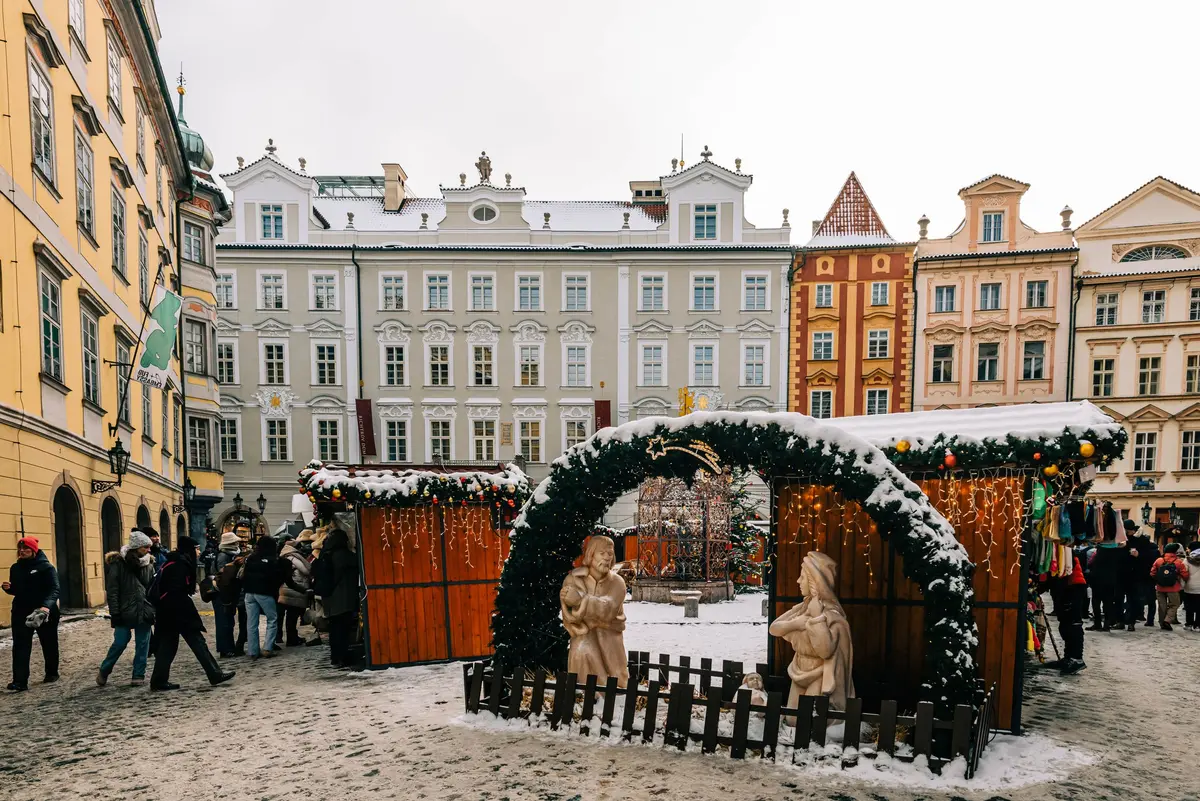
January and February are true winter: highs of around 2 °C, lows of -4 °C and darkness falls around 16:00-16:30. The Sedlec Ossuary in Kutná Hora has shorter winter hours, something to bear in mind if you are planning a day trip.
Clothing matters
Any old coat will not do. What works:
- A windbreaker: the wind off the Vltava and on Castle hill cuts through any jumper
- Thin gloves and a hat: essential from November
- Closed, waterproof shoes: wet or icy cobblestones are a trap
- Layers, always layers: you walk into a café at 22 °C and come out at -3 °C
What does NOT work: canvas trainers, ankle boots without non-slip soles and anything that is not waterproof.
Ideal for: budget travellers, Christmas market lovers (December) and anyone looking for an intimate Prague without crowds.
Quick comparison
| Season | Average highs | Crowds | Hotel prices | Key events |
|---|---|---|---|---|
| Spring (April and May) | 14–19 °C | Moderate to high | Mid-range | Easter markets, Castle gardens, cherry blossom |
| Summer (June to August) | 23–25 °C, with peaks of 35 °C | High to very high | High | Beer gardens, festivals, very long days |
| Autumn (September and October) | 13–19 °C | Moderate to low | Mid-range to cheap | Autumn colours, concert season |
| Winter (November to February) | 1–5 °C | Low (except at Christmas) | Cheap | Christmas markets, New Year's Eve |
What about a free tour?
Our tours run all year round, in rain, hail, snow or sunshine. They are only cancelled in extreme weather.
But the tour experience changes with the season, and it is something travellers rarely take into account when planning.
Summer: more people, more noise
In July and August groups are larger and there is more competition for space at the sights: Old Town Square can have dozens of groups at once. Hydration becomes an issue, we look for shade for the longer stops and the pace adapts to the heat.
Winter: small groups, a different atmosphere
In winter groups get smaller, and that changes the dynamic completely: more closeness, more questions, more conversation. Winter Prague, with mist over the Vltava, snowy rooftops and Christmas lights, has an atmosphere that does not exist in summer. It is another city.
The best months for a tour: May, September and October
These are our favourite months for guiding: manageable group sizes, weather that lets you walk without suffering, beautiful light and the city at its best.
Our four Spanish-language free tours run all year round:
- Old Town and Jewish Quarter, in front of the ZARA store at Na Příkopě 15
- Castle, Cathedral and Strahov Viewpoint, at the statue of Josef Mánes, next to the Rudolfinum
- Malá Strana and Charles Bridge, at Malostranská metro station
- Nazism and Communism, in front of the ZARA store at Na Příkopě 15
They all last about two and a half hours, and each season's times are on the tour page. More information in our guide to free tours in Prague.
Our verdict
There is no bad month to come to Prague. But some months are better depending on what you are after.
If you want the most complete experience: May or September. Good weather, reasonable crowds, mid-range prices and tours with manageable groups. They are the two months when everything works.
If you want to save as much as possible: January or February. Much cheaper hotels and the city almost to yourself, but with serious cold and short days.
If you want Christmas markets: December. But expect high prices and big crowds.
If you are travelling with children during the holidays: July works, August too, but be ready for crowds, queues and heat.
If you want to avoid something: November, until the Christmas markets open, is the hardest month: cold without the winter charm, no flowers and no terraces. We only recommend it if low prices are your sole priority.
If you want a day-by-day plan, see our Prague in 2 days itinerary. Our advice, the one we give friends and family: come in the second half of May or in September. If those dates do not work, April and October are the next best option.
And whenever you come: keep the outdoor sights (the Castle, Petřín, Vyšehrad) for the days with the best forecast and have a list of indoor plans (museums, cafés, the Klementinum library) for when the weather changes without warning. In Prague it always does.
Frequently asked questions
What is the best month to visit Prague?
May and September. Both offer good weather, moderate crowds and reasonable prices. If we have to pick one, May, for the longer days and the city in bloom. But September has fewer people and the first autumn colours.
Is Prague worth visiting in winter?
Yes, if you know what to expect. January and February are cold (highs of 2 °C and lows of -4 °C) and it gets dark early, but hotels are much cheaper than in summer, the city is quiet and the winter atmosphere, with mist over the Vltava, snowy rooftops and low light, is genuinely special. It is not for those looking for sun and terraces, but it is for those who want a different experience.
When are the Prague Christmas markets?
In 2026, the Old Town Square market opens on 28 November and closes on 6 January 2027, like the Wenceslas Square market. December is high season, so book your accommodation in advance. All the details are in our guide to the Prague Christmas markets.
Does it rain a lot in Prague?
Not as much as you might think. The wettest months are the summer ones, with short, intense storms, not autumn or spring. Rain rarely lasts all day: the usual pattern is a 30-40 minute shower and then the sun comes out. Pack a waterproof windbreaker and you will not need anything else.
Does it get very hot in Prague in summer?
It can. July and August highs are around 24 °C, but there are peaks of 35 °C. Nights cool down (15-17 °C). There is no sea breeze, so the urban heat is noticeable. Sun cream, water and outdoor visits best done in the morning.
When is the best time to visit Prague without crowds?
January and February, if you can handle the cold. Otherwise, from late September to mid-October: the weather is still good, prices drop and groups get noticeably smaller. November is quiet too, but the grey weather and lack of outdoor plans make it less appealing.